 vi
vi
 en
en
 kr
kr
 jp
jp
 cn
cn




What are materials that meet AS9100 standards?
In fact, the concept of “material meeting AS9100 standard” does not exist in the technical sense.
AS9100 is the standardquality management system (QMS)for businesses in the aviation industry, including manufacturers, processors and suppliers. This standard regulates how businesses control processes, quality and product traceability.
In other words:
- AS9100 applies tobusiness
- Do not apply directly tomaterial
However, when users search for “materials that meet AS9100 standards”, they often mean itMaterial supplied by supplier meets AS9100, ensuring quality and traceability in production.
Distinguishing AS9100 and material standards (AMS, ASTM)
To understand correctly, it is necessary to clearly distinguish between system standards and material standards.
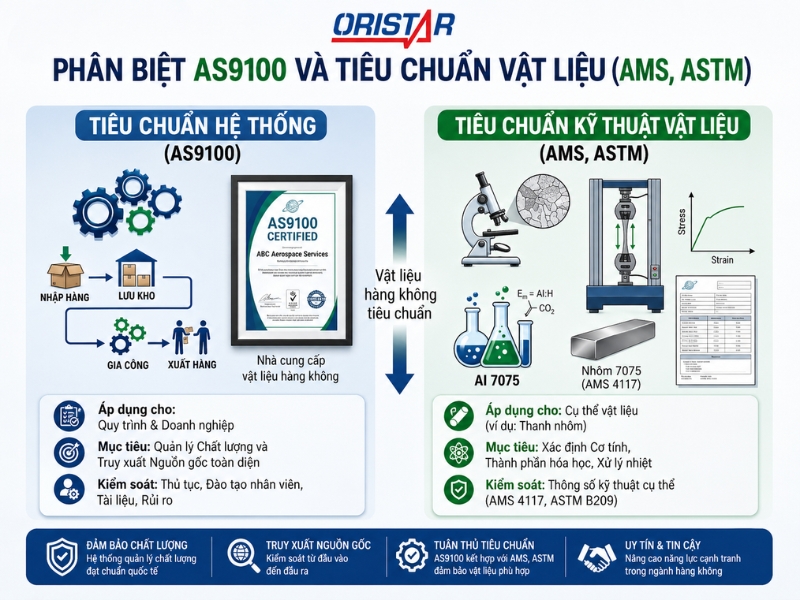
Standard | Apply for | Target | For example |
AMS | Material | Mechanical properties and components | Aluminum 7075 |
ASTM | Material | Technical standards | Alloy steel |
AS9100 | Enterprise | Quality management system | Supplier |
AMS or ASTM standards determine whether a material meets specifications, while AS9100 ensures businesses have the ability to consistently control quality.
The difference betweenAS9100 and AMSis an important factor in selecting standard aerospace materials.
What does “material meeting AS9100” mean in practice?
In production activities, the phrase "materials meeting AS9100 standards" is often understood in a practical sense:
- Materials are provided by an enterprise with a quality management system according to AS9100
- Have full material certificates (CO, CQ)
- Have traceability
- Clear quality control and inspection procedures
This helps ensure that materials are not only up to specification but are controlled throughout the entire supply chain.
Why is AS9100 important when choosing aviation materials?
In the aerospace industry, small material deviations can cause major risks. Therefore, the AS9100 standard plays an important role in:
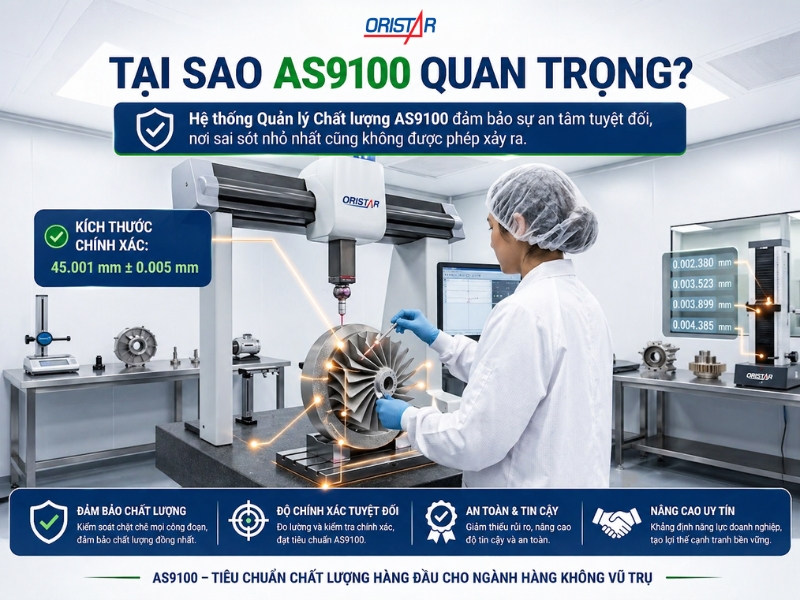
Ensure consistent quality
The management system helps control quality from input to output, reducing discrepancies between batches of materials.
Increase traceability
Each batch of material is traceable:
- Manufacturer
- Production process
- Specifications
Reduce risks in production
Working with a supplier with a control system helps limit errors and reduce costs incurred.
Mandatory element in aerospace materials
In fact, traceability is a mandatory requirement for standard aviation materials.
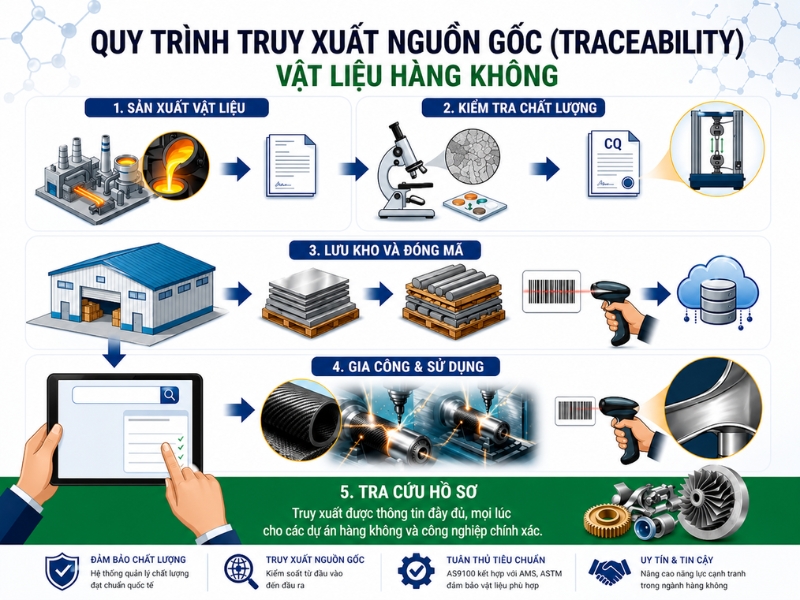
A satisfactory material must have:
- CO Certificate (Certificate of Origin)
- CQ Certificate (Certificate of Quality)
- Batch code and production history
- Quality inspection records
Traceability is not only for inspection but is also a mandatory element in many projects related to aerospace and precision industries.
How to choose a material supplier that meets AS9100 standards
Instead of looking for “materials that meet AS9100 standards”, businesses should focus on selectionsuitable supplier.
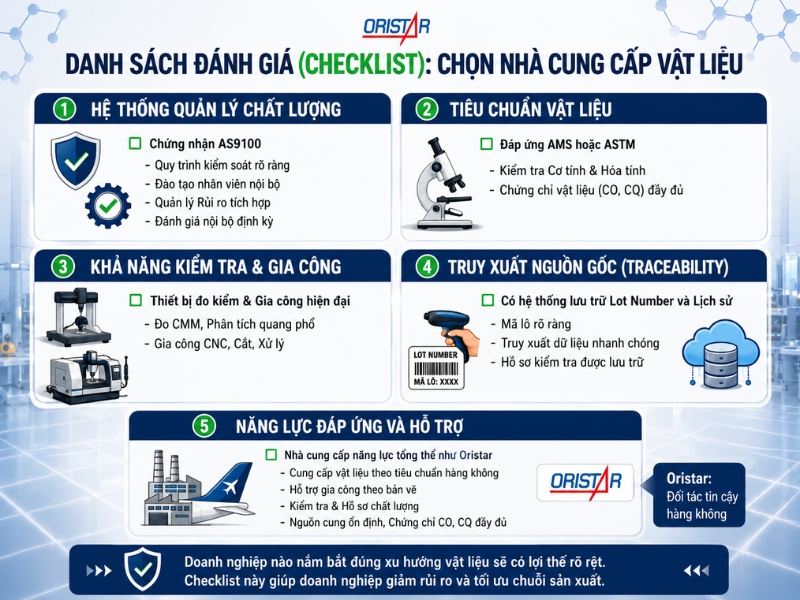
Checklist of reviews:
1. Quality management system
- Have clear control procedures
- There are operating standards
2. Material standards
- Meets AMS or ASTM
- Fully certified
3. Ability to check quality
- Testing equipment
- Inspection procedure
4. Machining ability
- CNC, cutting, processing
- Meet technical drawings
5. Traceability
- Have a data storage system
- Can check at any time
Common mistakes when understanding AS9100
- Given that AS9100 is the material standard
- Only check the documents and ignore the actual system
- Does not care about traceability
- Choose a supplier based solely on price
These mistakes can lead to major risks in production and inspection.
The role of suppliers in the aerospace material chain
In fact, material quality depends greatly on the supplier's capacity.
Units like Oristar can support:
- Provide materials according to technical standards
- Processing according to drawings
- Quality check
- Supports retrieval of material information
Working with capable suppliers helps businesses reduce risks and ensure production progress.
FAQ – Frequently asked questions
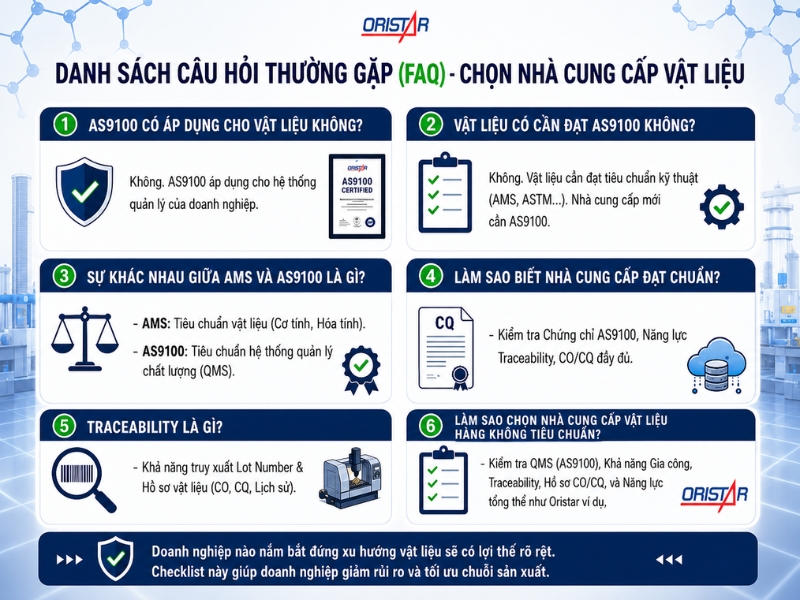
Does AS9100 apply to materials?
Are not. AS9100 applies to enterprise management systems.
Does the material need to meet AS9100?
Are not. Materials need to meet standards such as AMS, while AS9100 applies to suppliers.
What is the difference between AMS and AS9100?
AMS is the material standard, AS9100 is the system standard.
How do you know if a supplier is qualified?
Check certificates, management systems and traceability.
What is traceability?
Is the ability to retrieve all information about materials from production to use.
How to choose a material supplier that meets AS9100 standards?
Businesses need to check the supplier's quality management system, material certification, traceability and processing capacity.
Conclude
AS9100 material is not a specific technical standard, but is a way of talking about materials provided in an aerospace quality management system.
To ensure quality, businesses need to combine both factors:
- Materials meet technical standards (AMS, ASTM)
- The supplier has a clear quality management system
Understanding the true nature helps you choose the right partner and optimize the entire production chain.
Contact information:
- Hotline: 098 875 06 86
- E-mail:info@oristar.vn
- Zalo OA
- E-commerce website
- Official Website
Disclaimer:All technical and mechanical specifications in the article are for reference only and may change depending on specifications, material status and manufacturer. This specification is not a substitute for official production standards (JIS, ASTM...). Please contact Oristar to receive the most detailed and accurate advice for your needs.